
Shade Structures That Define Outdoor Zones
Pergolas and Pavilions in Madisonville for outdoor spaces that become unusable during midday heat or light rain
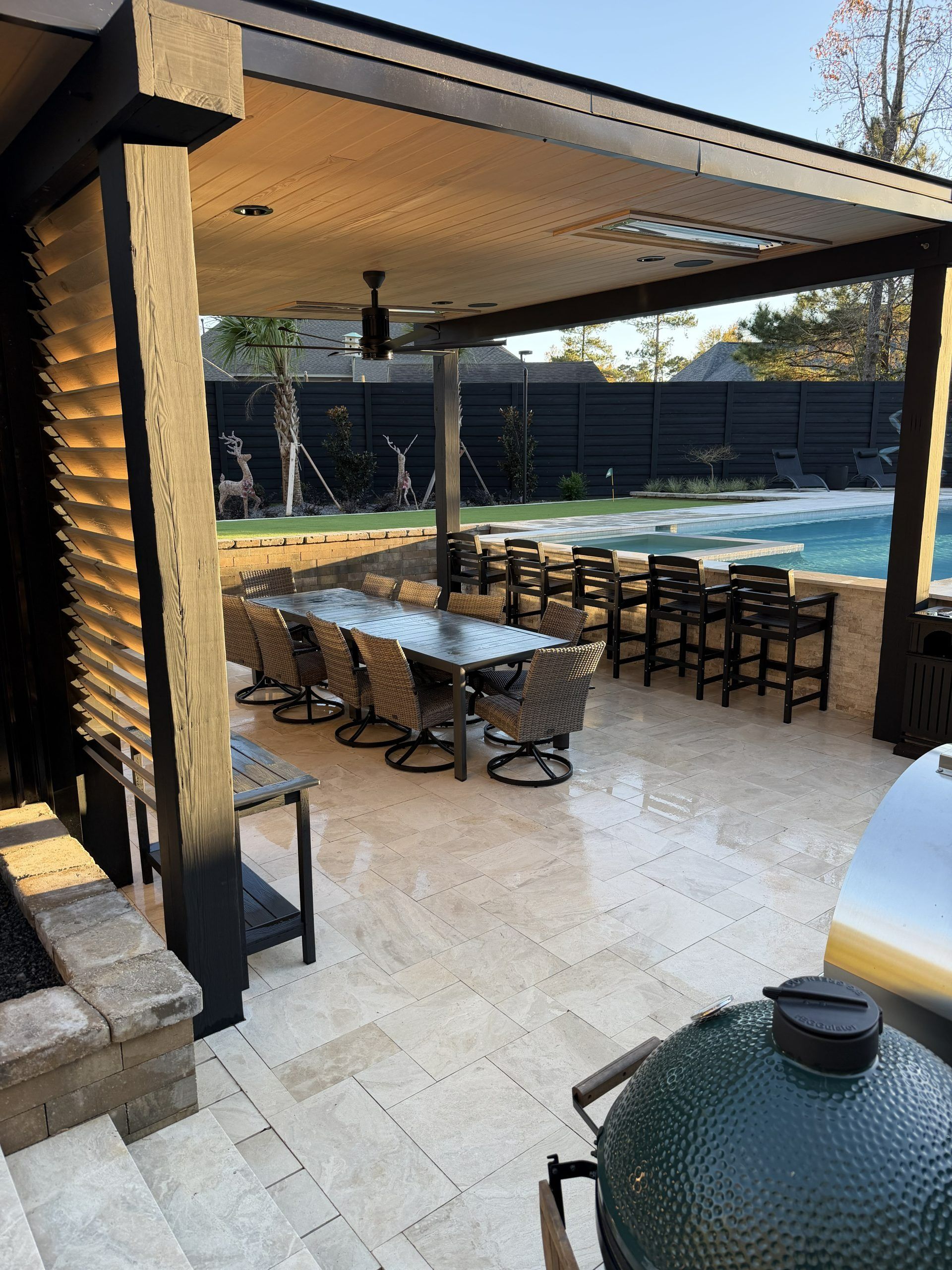
Uncovered patios and seating areas force gatherings indoors when sun exposure becomes uncomfortable or when passing showers interrupt outdoor activity. Pelican Outdoor Designs designs and builds pergolas and pavilions in Madisonville that provide overhead coverage without fully enclosing spaces, creating defined zones where furniture, grills, and seating arrangements receive protection from direct sun and light precipitation. The structures use treated lumber, composite materials, or engineered beams sized to span open areas without requiring center support posts that interfere with furniture placement or circulation.
Construction begins with footing installation—concrete piers or poured footings embed below frost line to anchor posts against wind uplift and lateral movement. Posts attach to footings using galvanized brackets that isolate wood from ground contact, preventing rot that weakens connections over time. Beams span between posts to support rafters or purlins that run perpendicular, creating the overhead grid that casts shade while allowing air circulation. Roofing options range from open slats that filter sunlight to solid panels or fabric canopies that block rain and provide complete overhead coverage.
Arrange a site visit to discuss structural dimensions and roofing options based on sun angles and typical weather patterns in your outdoor area.
Why Overhead Structures Work for Louisiana Climates
Shade structures reduce direct sun exposure that heats furniture surfaces and makes outdoor seating uncomfortable during midday hours, extending usable time into early afternoon when uncovered areas become too hot. Open rafter designs allow heat to rise and escape rather than trapping it beneath a solid ceiling, while still providing enough shade density to lower surface temperatures on tables, chairs, and decking below. Pavilions with solid roofing shed rain off covered areas, allowing outdoor kitchens and seating zones to remain functional during brief storms common in coastal Louisiana.
After installation, outdoor spaces gain definition—cooking areas separate from seating zones, and furniture arrangements anchor beneath covered sections rather than scattering across open yards. The structures also support accessories like ceiling fans, pendant lighting, or hanging plants that require overhead attachment points not available in uncovered patios.
Custom sizing accommodates existing deck or patio dimensions, and material choices balance cost against maintenance frequency—pressure-treated lumber requires periodic staining, while composite or vinyl-clad options resist weathering without refinishing. The structures do not provide climate control or insect screening unless additional enclosures install later as separate upgrades.
Questions Before Starting Your Project
Pergola and pavilion planning involves coordinating structural sizing, material durability, and integration with existing outdoor layouts before construction begins.
What is the difference between a pergola and a pavilion?
Pergolas use open rafter arrangements that filter sunlight and provide partial shade while allowing rain to pass through, whereas pavilions install solid roofing that blocks precipitation and offers complete overhead coverage for year-round use.
How deep do footing holes need to be for freestanding shade structures?
Footings typically extend thirty to thirty-six inches below grade in the Northshore region to reach stable soil beneath topsoil layers and provide resistance against wind uplift during storms that generate sustained lateral loads on overhead beams.
When should pergola construction occur relative to patio installation?
Coordinating both projects allows footing placement to integrate with paver layout and drainage grading, preventing the need to cut through finished hardscape later to add post footings that disrupt surface continuity.
Why do some pergolas in Madisonville use engineered beams instead of solid lumber?
Engineered beams resist warping and twisting better than dimensional lumber and can span longer distances without center supports, creating uninterrupted open space beneath the structure for furniture and circulation.
How much shade does an open-rafter pergola provide compared to a solid-roof pavilion?
Open rafters typically reduce direct sun exposure by fifty to seventy percent depending on slat spacing and sun angle, while solid roofs block all direct sunlight and precipitation but trap more heat unless ventilation gaps install along ridge lines or eaves.
Pelican Outdoor Designs builds custom pergolas and pavilions suited to Madisonville properties, coordinating dimensions and materials to match existing outdoor features. Contact our team to review design options and discuss structural requirements for your space.