
Cooking Spaces Built for Weather Exposure
Outdoor Kitchen and Grilling Areas in Madisonville for homeowners shifting meal preparation outside during warmer months
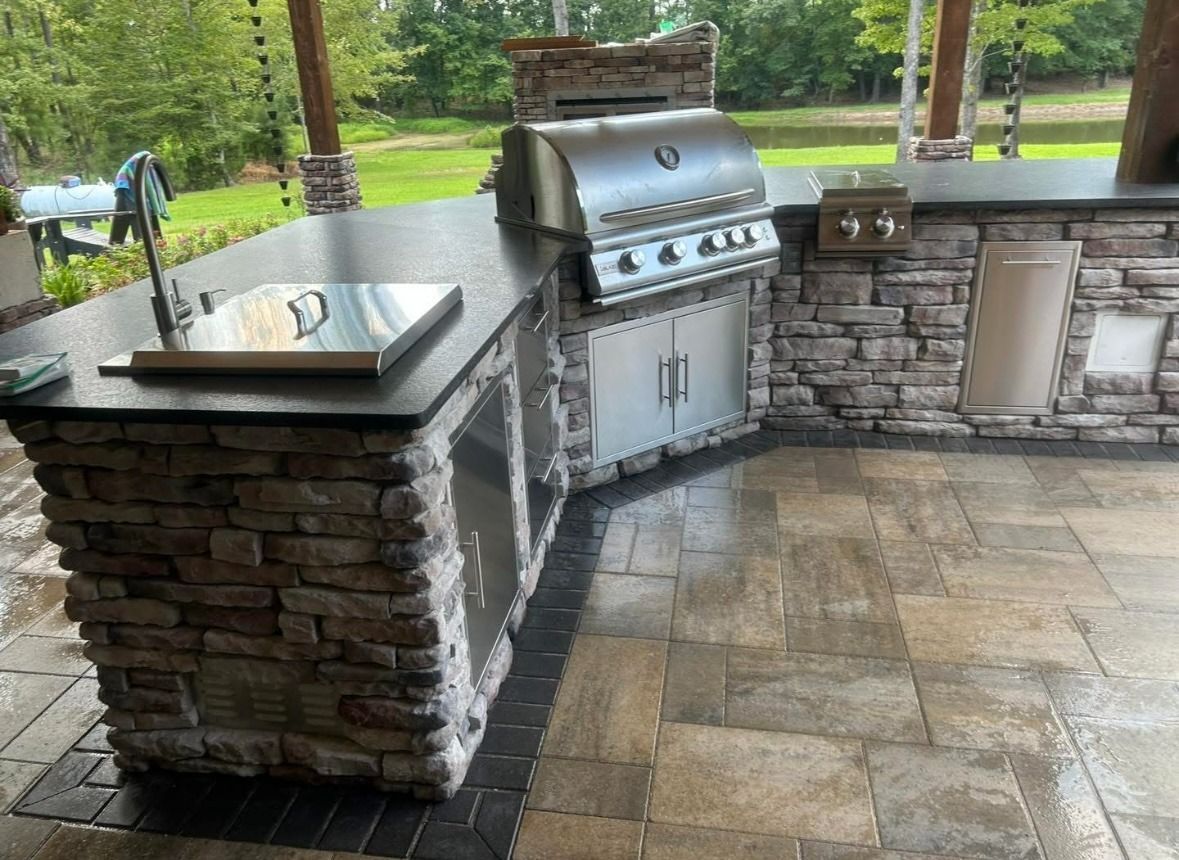
When indoor kitchens heat up during grilling or when gathering spaces require constant trips between backyard and stovetop, outdoor kitchen installations consolidate cooking, prep, and cleanup into weatherproof stations that remain functional through rain and humidity. Pelican Outdoor Designs builds custom outdoor kitchens in Madisonville using materials rated for continuous outdoor exposure, integrating built-in grills, prep countertops, storage cabinets, sinks, and appliances into cohesive layouts that connect directly with patios and seating areas. The installations eliminate the need to transport food, utensils, and dishware back and forth, keeping activity centered in the outdoor space where guests gather.
The construction process begins with utility routing—gas lines for grills and side burners, electrical circuits for refrigeration and lighting, and plumbing for sinks with hot and cold supply. Countertops use granite, concrete, or tile that resist staining and thermal shock from hot cookware, while cabinet boxes install with marine-grade hinges and sealed interiors that prevent moisture damage from humidity spikes common along the Northshore. Base structures use steel framing or concrete block to support appliance weight and prevent settling that misaligns doors or cracks countertop seams.
Arrange an on-site consultation to evaluate utility access points and discuss appliance selections based on cooking frequency and guest capacity.
How Outdoor Kitchens Address Functionality Gaps
Outdoor kitchen layouts position workflow zones—grilling, prep, plating, and cleanup—within efficient reach to prevent bottlenecks during cooking. Grills install with clearance from combustible materials and adequate ventilation to dissipate heat and smoke, while refrigeration units maintain food safety without requiring indoor storage trips. Sinks connect to either municipal water supplies or well systems, with drainage routed to septic or sewer lines depending on property infrastructure.
After installation, meal preparation no longer requires leaving the outdoor area, reducing interruptions during gatherings and keeping heat from grilling operations outside rather than warming interior rooms. Countertops provide stable surfaces for chopping, plating, and serving without improvising on portable tables, and storage cabinets keep utensils, seasonings, and dishware within arm's reach rather than stacked in distant indoor cabinets.
Premium installations may include features like pizza ovens, warming drawers, or beverage centers, though basic configurations focus on grill integration, prep surfaces, and cleanup access. The structures do not include climate control or full enclosure unless paired with pavilion or pergola additions that provide overhead coverage.
Answers to Frequent Service Questions
Outdoor kitchen planning involves coordinating material durability, utility access, and layout efficiency before construction begins.
What countertop materials hold up best in Louisiana humidity and rain?
Granite resist moisture absorption and thermal expansion better than tile with extensive grout lines, which can trap water and promote mildew in high-humidity climates where surfaces rarely dry completely between weather events.
How does outdoor refrigeration differ from indoor units?
Outdoor-rated refrigerators use sealed compressor housings and ventilation designs that function in ambient temperatures above ninety degrees without overheating, unlike indoor models that rely on climate-controlled environments to maintain efficiency.
When should plumbing and gas lines be installed during outdoor kitchen construction?
Utility lines embed in the base layer before hardscape or cabinetry locks into place, allowing inspections and pressure tests before surfaces and structures cover the connections permanently.
Why do some outdoor kitchens in Madisonville include sinks while others skip them?
Sinks add significant plumbing complexity and cost but eliminate trips indoors for washing hands, rinsing vegetables, or cleaning utensils, making them valuable for properties where outdoor cooking occurs multiple times weekly rather than occasionally.
How much clearance does a built-in grill need from cabinet walls and overhead structures?
Most manufacturers specify minimum side clearances of six to twelve inches and overhead clearances of three feet to prevent heat buildup that warps cabinetry or ignites combustible materials during extended high-heat cooking.
Pelican Outdoor Designs coordinates outdoor kitchen projects from utility planning through final appliance installation. Contact the office to review layout options and discuss material selections for your property.