
Surfaces That Drain and Last
Custom Concrete Work in Madisonville for yards where standing water, uneven ground, or lack of hardscape limits outdoor use
Concrete patios and walkways fail when grading directs water toward foundations or when inadequate base preparation allows slabs to settle unevenly over time. Proper concrete work involves more than pouring and smoothing—subgrade must be compacted to prevent settling, forms must be set to precise elevations to establish drainage slope, and control joints must be placed strategically to direct cracking along planned lines rather than letting it wander across visible surfaces. Pelican Outdoor Designs handles poured and decorative concrete for outdoor spaces in Madisonville, where clay soil and seasonal rain make drainage planning essential to long-term slab performance.
Concrete projects include patios, walkways, equipment pads, and specialty finishes like stamped or textured surfaces that add visual interest without sacrificing durability. Each installation begins with site evaluation: existing grade, soil type, drainage patterns, and how the new surface will connect to structures or landscape features already in place.
Request a concrete project estimate to assess your site conditions and discuss finish options that match your outdoor design.
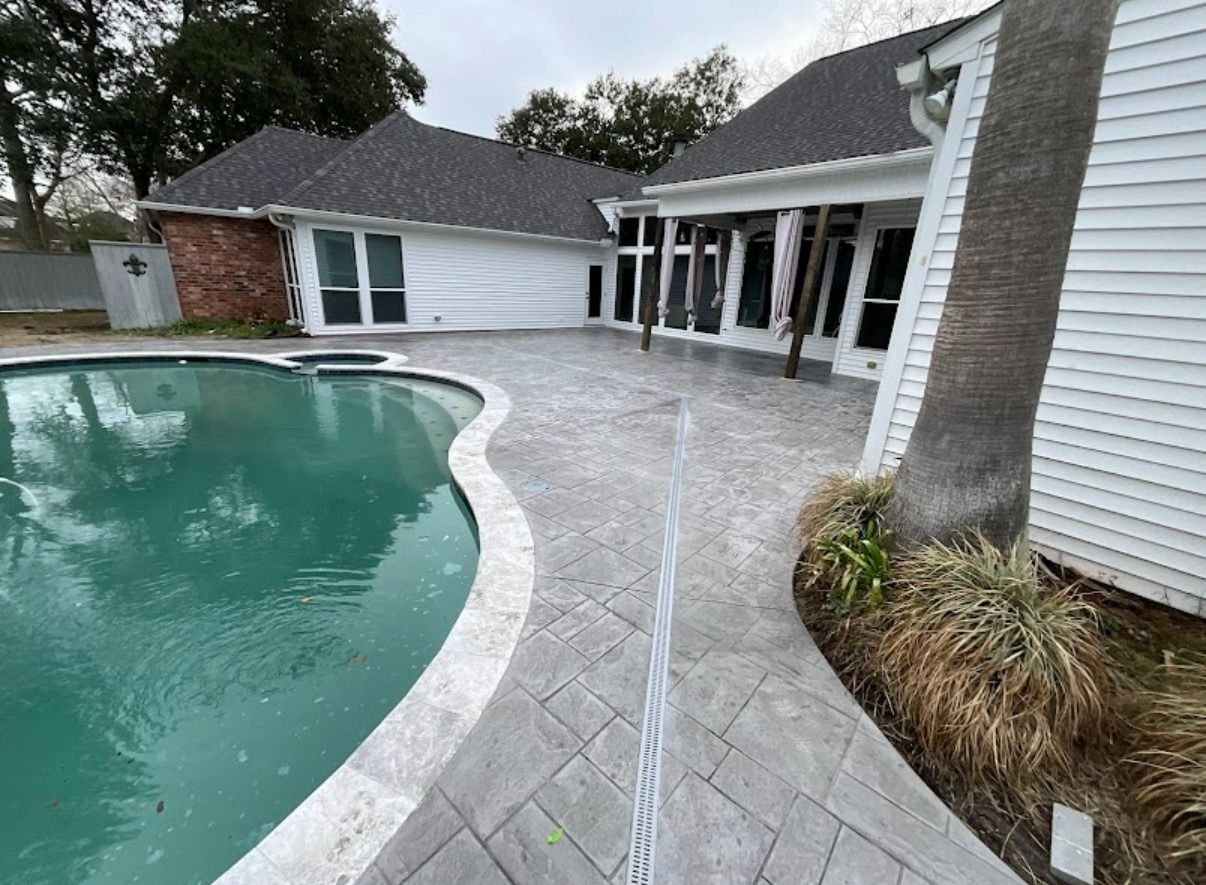
What Changes After Concrete Is Poured
Concrete cures to a hardness that resists surface wear from furniture, foot traffic, and weather exposure without requiring sealing or refinishing in most applications. Properly sloped slabs shed rainwater toward yard edges or drainage channels instead of pooling near doorways or seating areas, and textured finishes provide traction even when wet.
Once the surface is finished, you'll notice stable footing that doesn't shift underfoot, clean lines where concrete meets other materials, and a low-maintenance platform that requires only occasional washing to remove dirt or organic staining. Stamped patterns can mimic stone or brick at lower cost, and integral color eliminates the need for surface coatings that wear away over time.
Concrete integrates with other hardscape and landscape elements—it can form the foundation for outdoor kitchens, provide level landings at deck stairs, or create defined borders between planting beds and lawn areas. Control joints are cut or formed during installation to manage cracking, and expansion joints accommodate movement where concrete meets buildings or other rigid structures.
Questions Before Starting Your Project
Concrete projects generate practical questions about durability, finish options, and how the surface will perform in local conditions.
What determines whether concrete cracks?
Cracking results from shrinkage as concrete cures, ground movement beneath the slab, or insufficient control joints—joints are intentionally placed to confine cracks to straight lines that are less noticeable than random fractures across the surface.
How is proper drainage slope established for patios?
Forms are set to create a minimum slope of one-quarter inch per foot away from buildings, which moves water off the surface without creating a noticeable tilt—critical in Madisonville where heavy rain can overwhelm flat surfaces quickly.
When should decorative finishes be added to concrete?
Stamped patterns and textures are applied while concrete is still workable, before final curing—adding decorative treatments later requires overlays or coatings that may not bond as permanently as finishes integrated during the pour.
What preparation work happens before concrete is poured?
Subgrade is excavated to proper depth, aggregate base is compacted to prevent settling, forms are braced level, and any required rebar or wire mesh is positioned to reinforce the slab against cracking under load.
Why does concrete need time to cure before use?
Concrete reaches full strength over 28 days as chemical reactions continue inside the slab—walking on it after 24 hours won't damage the surface, but heavy loads or vehicles should wait until curing completes to avoid surface cracking or indentation.
Pelican Outdoor Designs handles concrete work as part of complete outdoor builds or as standalone hardscape projects. Set up a site visit to review grading requirements and discuss how concrete surfaces will integrate with your property's existing features and future plans.