
Surfaces That Handle Repeated Seasonal Exposure
Patios and Hardscape Installations in Madisonville for properties where grass or soil prevents consistent outdoor furniture use
Unpaved outdoor areas turn muddy after rain, develop uneven surfaces that tip furniture, and require constant mowing or weeding to remain usable. Pelican Outdoor Designs installs paver patios, walkways, and hardscape features in Madisonville using interlocking concrete or natural stone units that create stable, low-maintenance surfaces for seating areas, fire features, and outdoor kitchens. The installations replace grass or dirt zones with drainage-compatible surfaces that shed water quickly and resist cracking or settling when base layers receive proper compaction and grading.
Installation begins with excavation to remove topsoil and organic material that compresses over time, followed by graded base rock that compacts in lifts to create a stable foundation resistant to shifting. A layer of bedding sand levels the surface for paver placement, and edge restraints lock perimeter units in place to prevent horizontal creep. Pavers install in patterns selected for visual interest and structural interlock, with joint sand swept into gaps to resist weed growth and stabilize individual units against movement.
Request a site evaluation to assess grading requirements and discuss paver styles suited to your intended furniture layout.
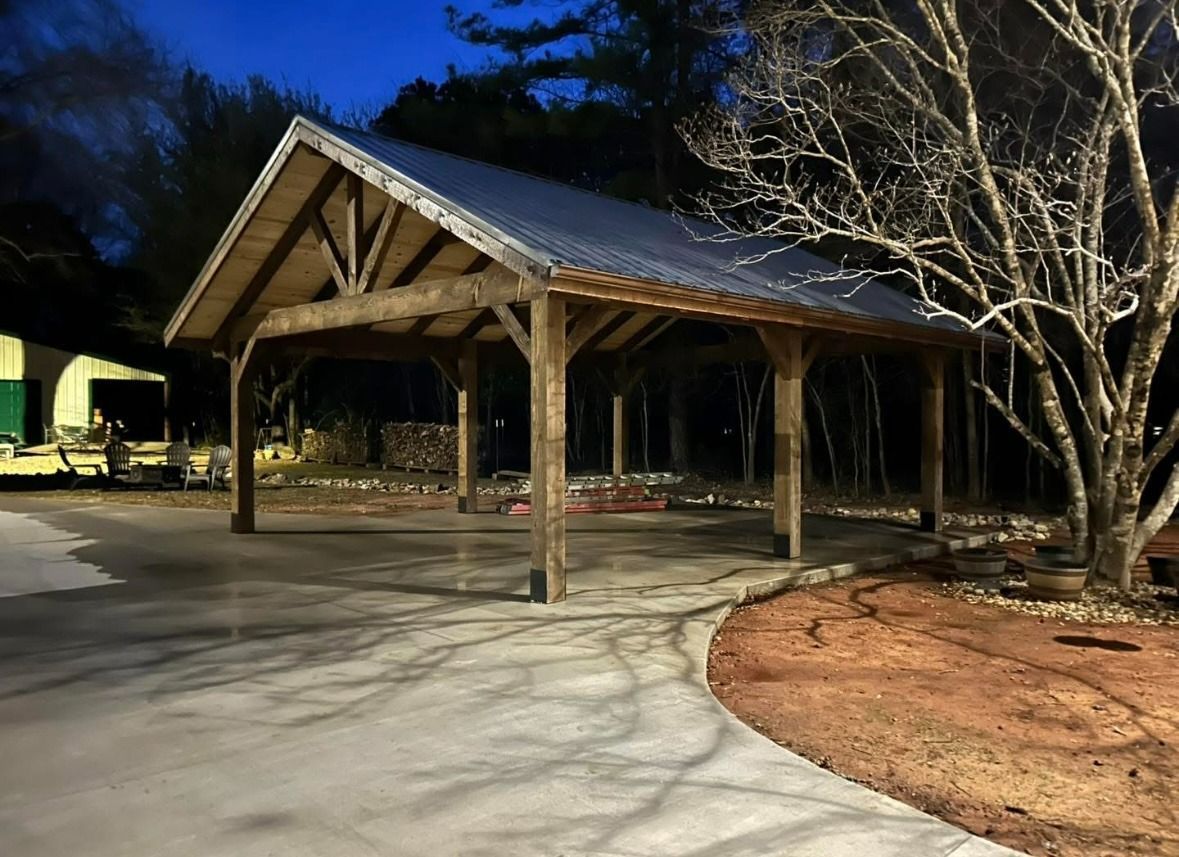
What Changes After Hardscape Completes
Properly constructed hardscape provides a surface that drains faster than surrounding soil, preventing puddles that persist for hours or days after storms. The compacted base distributes weight evenly across the paver field, eliminating soft spots that cause furniture legs to sink or tip when occupied. Pavers remain level across the installation without developing the cracks or surface deterioration common in poured concrete exposed to freeze-thaw cycles or root intrusion.
Once complete, outdoor furniture stays positioned without sinking into softened ground, foot traffic no longer tracks mud indoors after rain, and the surface requires only occasional sweeping or rinsing rather than weekly mowing or edging. Hardscape integrates directly with fire pits, outdoor kitchens, and pergolas, creating defined zones that separate cooking, seating, and circulation areas without relying on temporary borders or landscape fabric.
Color and pattern options allow customization to match architectural styles, though functionality depends more on base preparation and drainage grading than surface aesthetics. The installation does not prevent all weed growth in joints, though polymeric sand reduces germination compared to standard play sand.
Common Questions About This Service
Patio and hardscape decisions often involve understanding how base preparation affects long-term performance and how drainage protects the installation.
What causes pavers to settle unevenly after installation?
Inadequate base compaction or insufficient excavation depth allows voids to form beneath pavers when weight and water compress underlying soil, creating low spots that trap water and accelerate further settling in a cycle that worsens over time.
How does base rock depth affect patio longevity?
Deeper base layers—typically six to eight inches for pedestrian patios and ten to twelve inches for vehicular driveways—distribute loads across wider soil areas and resist compression better than shallow bases that concentrate weight on smaller footprints.
When should drainage adjustments be made during patio installation?
Grading occurs during base preparation before pavers lock into final position, ensuring water flows away from structures and does not pond on the finished surface or erode base material from beneath perimeter edges.
Why do some paver installations in Madisonville include polymeric sand while others use regular joint sand?
Polymeric sand contains binding agents that harden when wetted, reducing joint erosion and weed germination compared to standard sand that washes out during heavy rain common in the Northshore region.
How much surface slope should a patio have to drain properly?
A minimum slope of one-quarter inch per foot directs water off the patio surface without creating a noticeable tilt underfoot, preventing standing water that promotes algae growth and accelerates joint sand erosion.
Pelican Outdoor Designs handles patio and hardscape projects throughout the Madisonville area, coordinating grading and base preparation to support long-term surface stability. Schedule a consultation to review layout options and discuss material selections for your property.